
Finding proven video ideas across Instagram, TikTok, and YouTube requires keyword-level research across all three networks at once, rather than scrolling your personal phone feed. Sorting search results by view velocity and engagement ratio exposes topics audiences already watch, removing guesswork before you turn on your camera.
Three months ago, my Saturday mornings followed an exhausting routine. I sat at my desk with an iced coffee, three browser windows open, and my phone propped against a Sony microphone. I scrolled Instagram Reels until my thumb hurt. Then I opened TikTok to check trending sounds. Then I jumped to YouTube to see what showed up under search suggestions.
Two hours later, I had twenty-two random screenshots, four half-baked bullet points in Apple Notes, and zero completed scripts. My camera battery sat on the charger, completely unused.
That habit was not research. It was procrastinating under the guise of finding creative inspiration.
Your personal feed shows you what consumer algorithms want you to consume during downtime. Not what buyers need. It never shows you what your target market actively types into a search bar at 2 AM when they need an answer, which means you spend weeks building content nobody requested. Treat ideation like data collection. Numbers first. Mood boards later.
The Scrolling Problem: Why Native Feeds Lie to Creators
Native social app feeds display content tailored to your private viewing habits, not an objective index of what works in your business niche.
When you open TikTok or Instagram on your phone:
- Recommendation engines feed you dopamine loops based on late-night scrolling history.
- Pinned posts on competitor profiles hide their recent publishing flops.
- Sponsored brand deals look identical to organic audience demand.
- You cannot sort an account by total watch time or view-to-follower ratio.
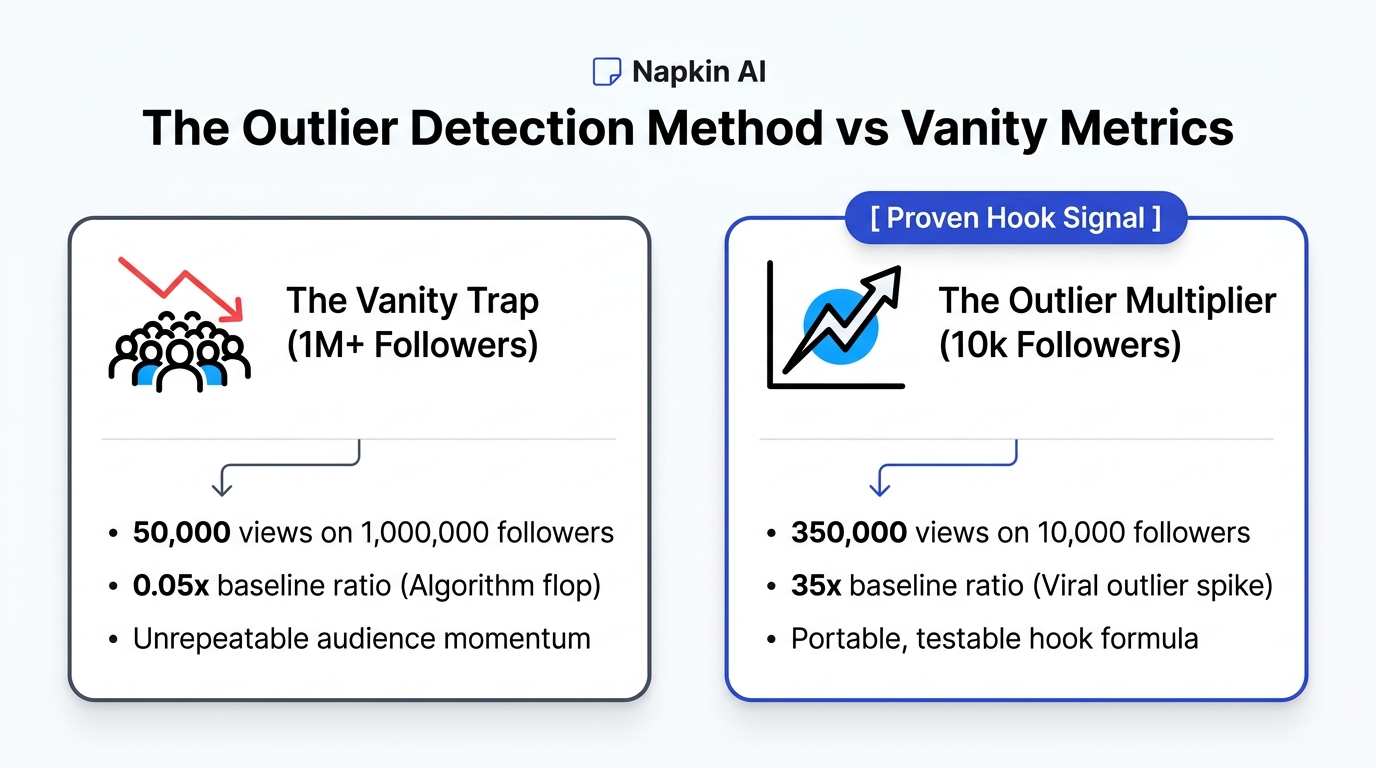
If you study a creator with two million followers, their success metrics mislead you. When they upload a video about productivity setups, forty thousand loyal fans watch it within fifteen minutes simply because they like the person. The recommendation engine pushes that video to wider feeds based on early retention.
Trying to copy that exact hook on a fresh account with eight hundred followers will leave you staring at two hundred views. Small accounts do not have audience momentum. You need topics with strong organic pull where cold viewers stop scrolling for the concept itself.
Manual Feed Hunting vs. Cross-Platform Keyword Research
Searching by keyword across multiple platforms gives you an unfiltered look at market interest. Here is how manual phone browsing compares to structured data discovery:
| Dimension | Manual Feed Scrolling | Unified Keyword Research |
|---|---|---|
| Data Source | Personal algorithmic feed bubble | Public search queries and keyword indices |
| Platform Scope | One phone app at a time | Instagram, TikTok, and YouTube in one view |
| Performance Filtering | Manual mental math guessing outlier spikes | Direct sorting by total views and engagement |
| Time Investment | 6 to 8 hours every week | 20 minutes per batch sprint |
| Output Type | Disorganized camera roll screenshots | Selectable sources ready for script generation |
| Algorithmic Bias | Heavily warped by personal watch history | Objective view of audience search demand |
The Outlier Ratio: How to Spot Real Audience Demand
An outlier video is any post that generates at least five times more views than that creator’s median baseline over the past sixty days.
Finding these spikes matters because they prove the topic resonated beyond the creator's existing subscriber base. If a channel averages three thousand views per upload and suddenly publishes a video that pulls two hundred and forty thousand views, you have found an algorithmic outlier.
The algorithm did not push that clip because of the creator's reputation. It pushed the video because the hook triggered curiosity and delivered on the premise quickly.
Here is the quick formula I calculate before saving any video idea:
$$\text{Outlier Ratio} = \frac{\text{Specific Video Views}}{\text{Median Views Across Last 10 Posts}}$$
- Ratio below 1.5x: Average performance. The topic only appealed to existing subscribers.
- Ratio between 2.0x and 4.0x: Good traction. Worth noting the title structure.
- Ratio above 5.0x: High-conviction outlier. The hook concept broke through into cold traffic.
When you run a search inside Popular Videos, you enter a keyword like "content strategy" or "remote sales tips" and choose your network. Instead of clicking twenty different creator handles, you inspect the top-performing videos across Instagram, YouTube, and TikTok in one list.
You see the view count, total comments, and publish date immediately. That lets you identify which specific questions people care about right now.
From Video Inspiration to a Completed Script
Saved links rot in bookmark folders. You need an immediate, friction-free bridge between finding an outlier video that stopped thousands of cold scrollers and drafting your own filming outline before Monday morning rolls around.
Here is the exact four-step workflow to turn raw source material into a finished script:
1. Collect Three Variations of One Core Angle
Start in Popular Videos. Type your topic keyword. Grab one top-performing example from TikTok, one from YouTube Shorts, and one from Instagram Reels. Studying all three formats at the same time reveals how different audience temperaments consume the exact same subject matter. TikTok usually favors immediate visual pattern interrupts. YouTube Shorts relies on clean voice clarity and pacing. Instagram Reels rewards high save counts and practical utility.
2. Isolate the Opening 3-Second Hook
Write down the first sentence spoken in each video word for word. Notice the syntax. Did the creator open with a controversial opinion? Did they state a surprising number? Did they challenge a common piece of advice?
Bad Hook: "Hey guys, today I want to talk about how you can fix your lighting setup on a budget."
Proven Hook: "Your desk lamp is making your video look cheap. Put it behind this piece of cardboard instead."
The second hook works because it points out an immediate mistake and offers a low-cost fix in twelve words.
3. Add Sources to Your Creator Canvas
Once you pick your source videos, send them directly to your visual workspace. In Creator Insights, you can push selected results into your Script Generator. The system analyzes the transcript structure of those winning examples alongside your stored brand instructions.
4. Write an Original Angle for Your Audience
Never copy someone else’s script word for word. That damages your reputation and bores viewers who already saw the original.
Instead, ask your workspace to produce an alternative point of view:
- If the source video shared three software tools, write your script about why two of those tools waste money for beginners.
- If the source video showed a complex setup, show how to achieve seventy percent of that result with zero extra hardware.
You keep the proven curiosity hook structure while injecting your own lived experience.
Cross-Network Research: Why Single-Platform Creators Fall Behind
Relying exclusively on Instagram or TikTok blinds you to content trends that already succeeded elsewhere.
Trends move fast. A creator records a raw, off-the-cuff rant from their car on TikTok that pulls half a million views in two days because the opening premise touched a nerve. Seven days later, those identical hooks show up on Instagram Reels with pastel captions and neat typography. Two weeks later, YouTube Shorts creators produce polished studio versions.
Monitor Competitor Tracking alongside cross-network search feeds daily. That catches the wave early. You record your original take while everyone else in your industry is still debating whether the trend is real.
When your MP4 file is graded and ready, never waste an hour uploading it manually through five different mobile interfaces. Open the Multi-Post Composer. Upload your finished media once, customize each network's title or caption natively, and distribute across YouTube, Instagram, TikTok, LinkedIn, and Facebook in one turn.
If you prefer building automated workflows through Claude Desktop or Cursor, you can query these research endpoints directly using the Creator Insights MCP Server. And when you want to build relationships by answering questions under popular discussions on X, Threads, or Substack Notes, open the Engage Comment Assistant to join conversations with human-reviewed replies.
Frequently Asked Questions
What is the fastest way to find video inspiration in a boring niche?
Search for specific customer problems rather than broad industry terms. If you sell accounting software, avoid searching for "accounting tips." Search for "tax penalties small business" or "invoicing mistakes." Practical pain points always generate higher view-to-follower ratios than general advice.
How often should I run cross-platform video research?
Run one twenty-minute research sprint at the start of your content week. Collect five to seven validated concepts in Popular Videos, send them to your script drafts, and close the search dashboard. Continuous daily scrolling leads to analysis paralysis and stalls your production schedule.
Does remaking a viral video idea count as copyright infringement?
Copyright protects specific recorded media, audio files, and verbatim text, but it does not protect general topics, ideas, or pedagogical formats. As long as you write your own script, record original footage, and share your personal perspective, you are using market research legally. Never re-upload another creator's raw video clips without explicit written permission.
Why do videos perform well on TikTok but fail on Instagram Reels?
Each app cultivates distinct viewer expectations. TikTok users tolerate shaky handheld camera angles and raw ambient noise as long as your story hooks them within two seconds. Instagram audiences scroll past grainy footage immediately. They want crisp contrast, legible font sizing, and saturated color grading. Match your export bitrate and typography to each network before publishing.