
Most creators watch a viral video and think that was good. They might even like it or share it. But they often do not know why it was good. This is the fundamental difference between luck and strategy in the creator economy.
When a video explodes, it is rarely an accident. There is a precise structure underneath the surface that keeps people watching. If you want to replicate that success, you have to move past being a casual viewer and become a student of the craft. You need to perform a deep viral video analysis every time you see a post that is clearly an outlier.
By using a hook analysis tool and a structured framework, you can stop guessing and start building content that people actually want to finish. Let us break down the four pillars of viral content.
The Anatomy of a Viral Video
Every piece of high performing content can be broken down into four distinct phases. If any one of these is weak, the entire video fails to reach its potential.
- The Hook: The first three seconds. This is your only chance to stop the scroll.
- The Pacing: How fast the information comes. This keeps the brain engaged.
- The Retention: The middle section where you keep the promise made in the hook.
- The CTA: The Call to Action. What the viewer should do next.
A great video looks like a smooth experience, but it is actually a carefully planned sequence of events designed to capture and hold attention.

1. The Hook: The First 3 Seconds
The hook is the most critical part of your video. In the age of short form content, you have about zero to three seconds to convince someone that your video is worth their time. A strong hook creates an information gap or makes a promise of value.
There are three main types of hooks that consistently win:
- The Problem Hook: You identify a pain point your viewer has. (Example: You are editing your videos completely wrong.)
- The Curiosity Hook: You show something unexpected. (Example: I tried this one weird trick and it doubled my views.)
- The Proof Hook: You show the end result first. (Example: How I made ten thousand dollars in one week.)
When you use a hook analysis tool, you can see which of these styles is trending in your specific niche. The goal is to create a pattern interrupt that breaks the mindless scroll of the user.

2. Pacing: The Rhythm of Attention
Pacing is the speed at which your story moves. Many creators make the mistake of having too much dead space. In a viral video, every second must serve a purpose.
If your pacing is too slow, people get bored and swipe away. If it is too fast, they get overwhelmed. The secret is to use pattern interrupts. These are small changes in the visual or audio every few seconds. This could be a camera zoom, a text overlay, a sound effect, or a transition.
Research shows that viral Reels and TikToks often have between eight to fifteen cuts per minute. This keeps the visual field fresh and tells the brain that new information is coming.
3. Retention: The Information Gap
Retention is what keeps people watching until the very end. This is usually driven by an information gap. If your hook asks a question, the middle of your video should slowly reveal the answer without giving it all away at once.
You want to maintain tension. Think of it like a story arc. You have a setup, a build, and a payoff. If you give the payoff too early, the viewer has no reason to stay. If you wait too long, they lose interest.
A great way to boost retention is through on screen text and clear voiceover synergy. When people see and hear the same information at once, they process it faster and stay engaged longer.

4. CTA: The Reward and the Action
The Call to Action is where you tell the viewer what to do. But a viral CTA is not just a demand. It should feel like a natural next step.
Instead of saying "follow me," you might say "save this for your next edit" or "comment your favorite tip below." This encourages engagement which signals to the algorithm that your content is valuable. High engagement leads to a wider distribution, which is how a video becomes a true outlier.
How Creator Insights Breaks It Down
Manually analyzing every video you see is exhausting. That is why we built specific tools to automate this process. Our scripts and transcription tool allows you to take any viral link and turn it into a blueprint for your own content.
Here is how the process works:
Paste the Link
You find a video that is performing exceptionally well in your niche. You paste the URL into the Creator Insights dashboard. Our AI instantly fetches the video and prepares it for analysis.
AI Transcription and Analysis
The tool transcribes every word. But it goes deeper than just text. Our AI analyzes the structure. It identifies the hook, the core message, and the closing CTA. It looks for those pacing patterns that made the original video a hit.
Structural Breakdown
You get a report that tells you exactly why the video worked.
- Hook Strength: Was it a problem, curiosity, or proof hook?
- Pacing Pattern: Where were the cuts? How was the information delivered?
- Retention Triggers: What were the key moments that kept people watching?

Chat With the AI
Once you have the breakdown, you can actually talk to the content. We have an AI assistant that lives inside the script editor. You can ask it specific questions to deepen your viral video analysis.
You might ask:
- "Why did this hook work for a professional audience?"
- "What would happen if the pacing was slower for this topic?"
- "Can you suggest three different hook variations based on this structure?"
This interactive process helps you understand the strategy behind the video. You are not just looking at a script; you are learning the psychology of the viewer.
Apply the Pattern
The final step is to take these lessons and apply them to your own voice. We never recommend copying content word for word. That is not how you build a brand.
Instead, you use the structural patterns. If a specific "how to" structure is going viral, you use that same structure but fill it with your own expertise and your own stories. You can generate a brand new script using the same successful pacing and hook structure but written specifically for your niche.
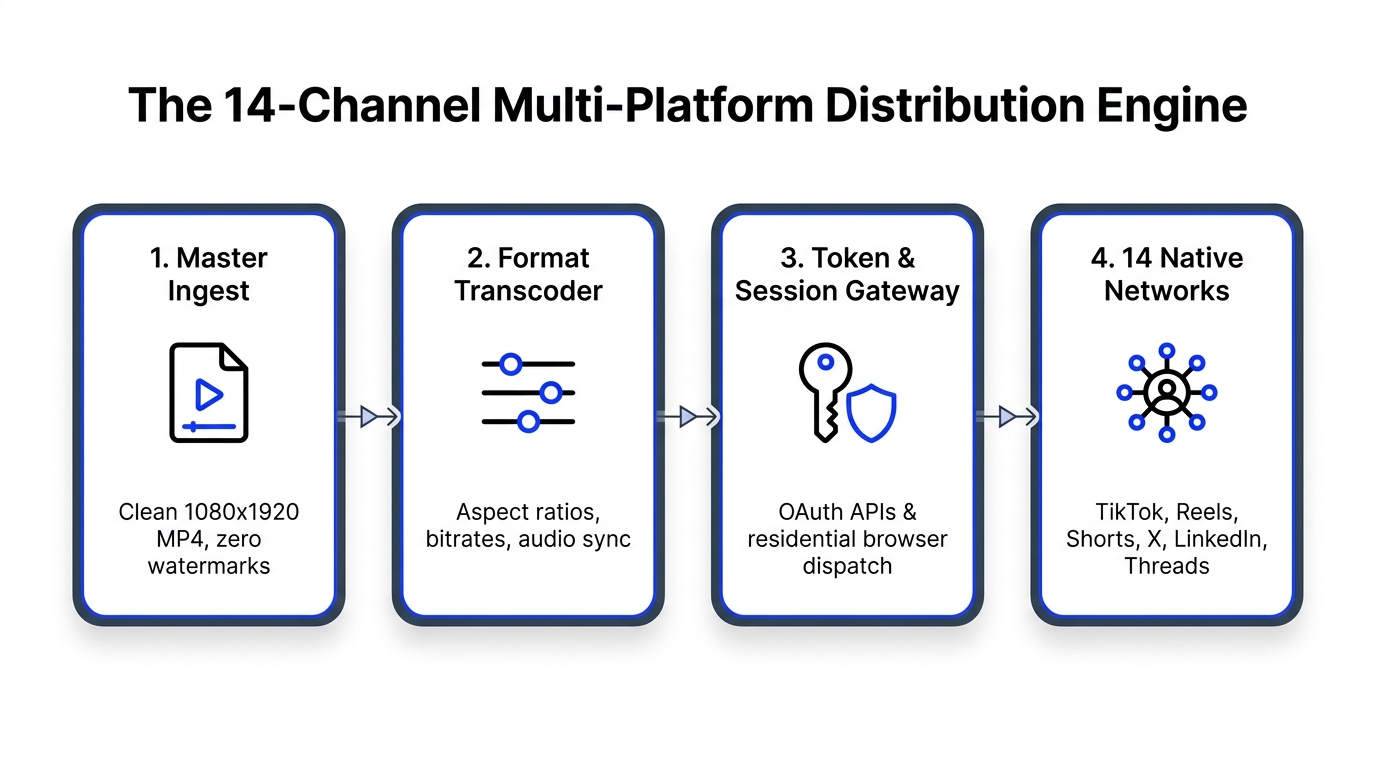
This allows you to benefit from what is already working while remaining original. It is the smartest way to use a hook analysis tool to grow your presence across all 14 platforms we support, from Instagram to YouTube to LinkedIn.
Stop Guessing and Start Scaling
The difference between a creator who stays small and one who scales is data. You cannot rely on "vibes" to go viral. You need to understand the mechanics of attention.
By breaking down your favorite videos into hooks, pacing, and retention, you create a repeatable system for success. You stop being a passive consumer and start being a strategic producer.
Ready to see the data behind the videos you love? Analyze your first viral video today using our scripts tool and start building your own library of high performing content.