If you’re still hiring creators based on a six-figure follower count, you’re not marketing. You’re gambling. And the house, in this case, the bots and the "engagement pods", is definitely winning.
The industry has a massive catfishing problem. No, not the kind where someone uses a profile picture from 2012. We’re talking about "Influencer Fraud." It’s the art of looking like a powerhouse on paper while having the actual selling power of a wet paper towel.
You see 500,000 followers. You see 2,000 likes per post. You think, "This is it. This is our breakout campaign." Then you send the product, pay the $5,000 fee, and get exactly zero sales.
Welcome to the catfish era. Let’s talk about how to stop being the victim.
The Numbers Are Lying to You
Here is a hard truth: Most "standard" metrics are useless.
Follower counts are the ultimate vanity metric. Anyone with a credit card and ten minutes can buy 50,000 "followers" from a click farm. They look real enough at a glance, but they’ll never buy your skincare line or download your app.
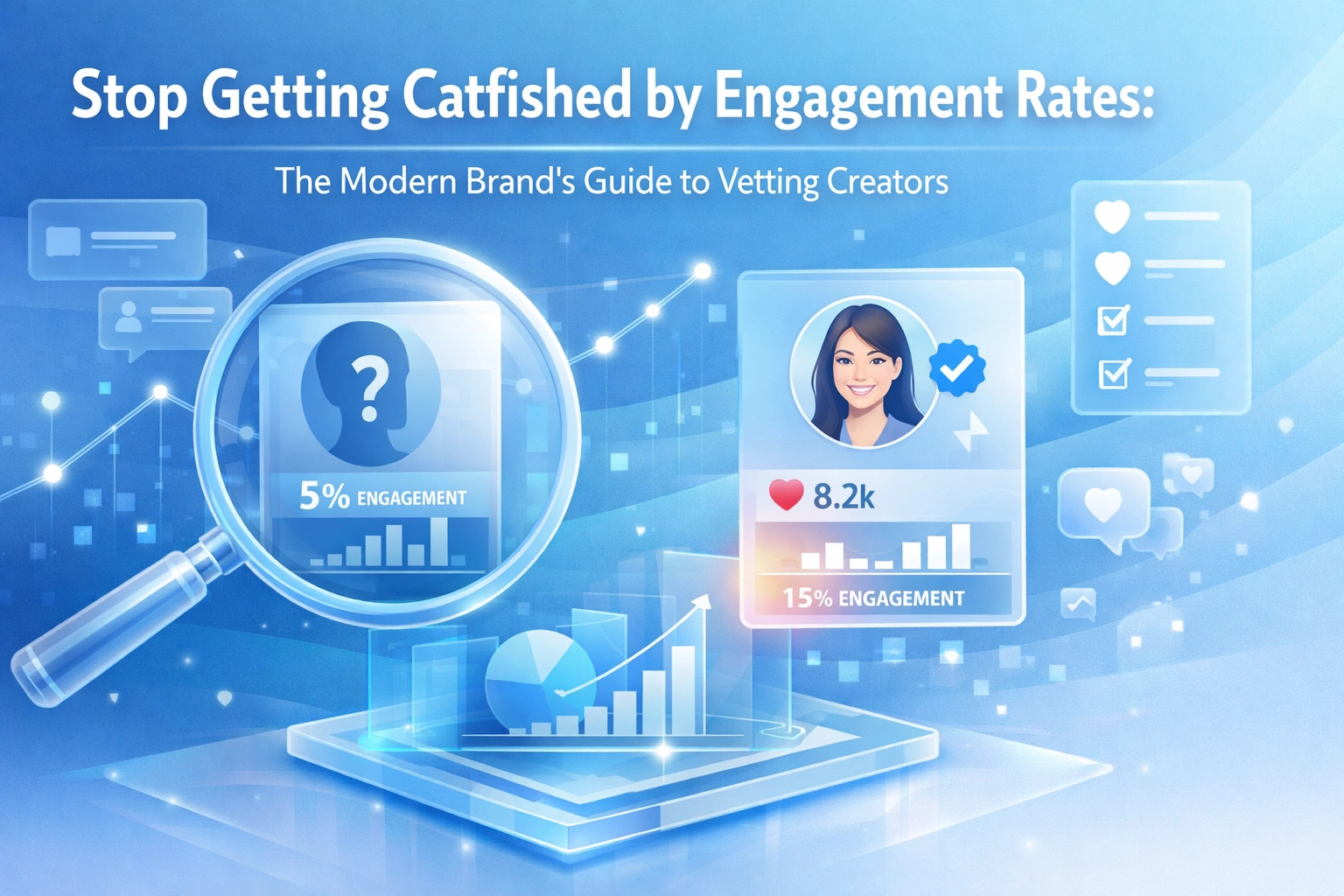
Then there’s the engagement rate. For years, brands have used the instagram engagement rate calculator as the holy grail. But even that is being hacked. Ever heard of engagement pods? These are groups of creators who all agree to like and comment on each other's posts the second they go live.
It creates an illusion of heat. It tricks the algorithm into thinking the post is viral, and it tricks you into thinking the creator has a loyal community.
In reality, it’s just a circle of people shouting into an empty room.
 *Napkin Visual: A simple drawing showing a large circle labeled "1 Million Followers" with a tiny, tiny dot inside labeled "People who actually care." Next to it, a small circle labeled "10k Followers" where the entire circle is shaded "People who buy stuff."*
The Anatomy of a Catfish: Red Flags
How do you spot a fake before you sign the contract? You need to move past the surface and look for the grit.
1. The "Emoji Only" Comment Section
Go to their latest post. Look at the first 50 comments. Are they all "Stunning! 🔥🔥," "Nice one! 🙌," or "Love this!"?
That’s a red flag. Real communities ask questions. They share personal stories. They disagree. If every comment looks like it was generated by a basic AI script (or a bored person in a pod), that creator doesn't have influence. They have a "pat on the back" squad.
2. The Staircase Growth Curve
Check their growth history on a creator analytics platform. Real growth is messy. It’s a series of hills and valleys.
If you see a creator’s follower count flatline for months, then suddenly jump by 10,000 in a single day, followed by another flatline, they bought them. Real virality usually has a "tail." A jump in followers should be accompanied by a jump in engagement across several posts, not just a one-day spike.
3. High Engagement, Low Story Views
This is the ultimate test. Ask for their story views. A creator might be able to fake 5,000 likes on a feed post, but faking consistent, high-volume story views is much harder and more expensive. If they have 200k followers and get 2,000 likes, but only 400 people are watching their stories?
Run. The "inner circle" is non-existent.
The Modern Vetting Framework: A 5-Step Bullsh*t Detector
Stop guessing and start auditing. Here is how we vet creators in 2026.
Phase 1: Identity and Cross-Platform Check
If someone is a "star" on Instagram but has zero footprint on X (Twitter), Reddit, or YouTube, be wary. True influence usually bleeds over. Search their handle on Reddit. Do people talk about them? Do they have a "hate-following" or a "stan-following"? Both are better than no following at all. Silence is the real enemy.
Phase 2: The Audience Audit
Use a creator discovery tool to see where their followers are. If you are a local NYC coffee brand and the creator’s audience is 80% based in Brazil, the partnership is a waste of money, no matter how high their engagement is.
Phase 3: Brand Safety & Tone
Don't just look at the photos. Watch the videos with the sound on. Do they align with your brand's voice? Have they promoted three different competing brands in the last month? If they’ll shill for anyone who pays, their audience has already tuned out their recommendations.
Phase 4: Performance Verification
Don't take their word for it. Ask for case studies. Better yet, use a tool that tracks their previous sponsorship performance. Did their last video for a similar brand actually drive traffic? If they can’t show you a "swipe up" or "link in bio" success story, you’re just paying for a digital billboard that nobody is looking at.
Phase 5: The Gut Check
Does it feel like a human is running the account? Or does it feel like a curated museum of perfection? In 2026, "Human-Premium" content wins. We want the unpolished, the raw, and the authentic. The more "perfect" a feed looks, the more likely it is that the audience is just there for the aesthetics, not the advice.
 *Napkin Visual: A "Vibe Check" meter. On one end, "Robotic & Perfect" (labeled 'DO NOT HIRE'). On the other end, "Messy & Trusted" (labeled 'GOLD MINE').*
Why Manual Vetting is Still King
Data is the foundation, but your eyes are the final judge.
A creator analytics platform can tell you the engagement rate is 4.5%. It can’t tell you that the creator’s vibe is annoying or that they have a history of being rude to their followers in the comments.
You need a hybrid approach. Use the tools to filter out the 90% of creators who are clearly faking it. Then, spend your time manually diving into the top 10%. Watch their stories for three days. See how they interact. Do they feel like someone you’d actually take advice from?
If the answer is no, your customers will feel the same way.
How to do it with Creator Insights
We built Creator Insights to end the "catfishing" era. We don't just give you a list of names; we give you a forensic report.
- Discovery Tool: Filter by real audience location, age, and interests. No more guessing if you're reaching the right people.
- The Audit Tool: Our instagram engagement rate calculator doesn't just show a number. It breaks down audience quality and flags suspicious growth patterns.
- Sponsalert: Use Sponsalert to see who is actually getting hired and what their performance looks like before you reach out.
Stop wasting your marketing budget on vanity. Start investing in real human connections.
Ready to find creators who actually move the needle?
Audit your first creator for free at Creator Insights