
So, you want to be a content creator.
Maybe you’ve watched a YouTuber share their journey, or you’ve seen a TikToker build a massive community from their bedroom, and you’ve thought, "I could do that."
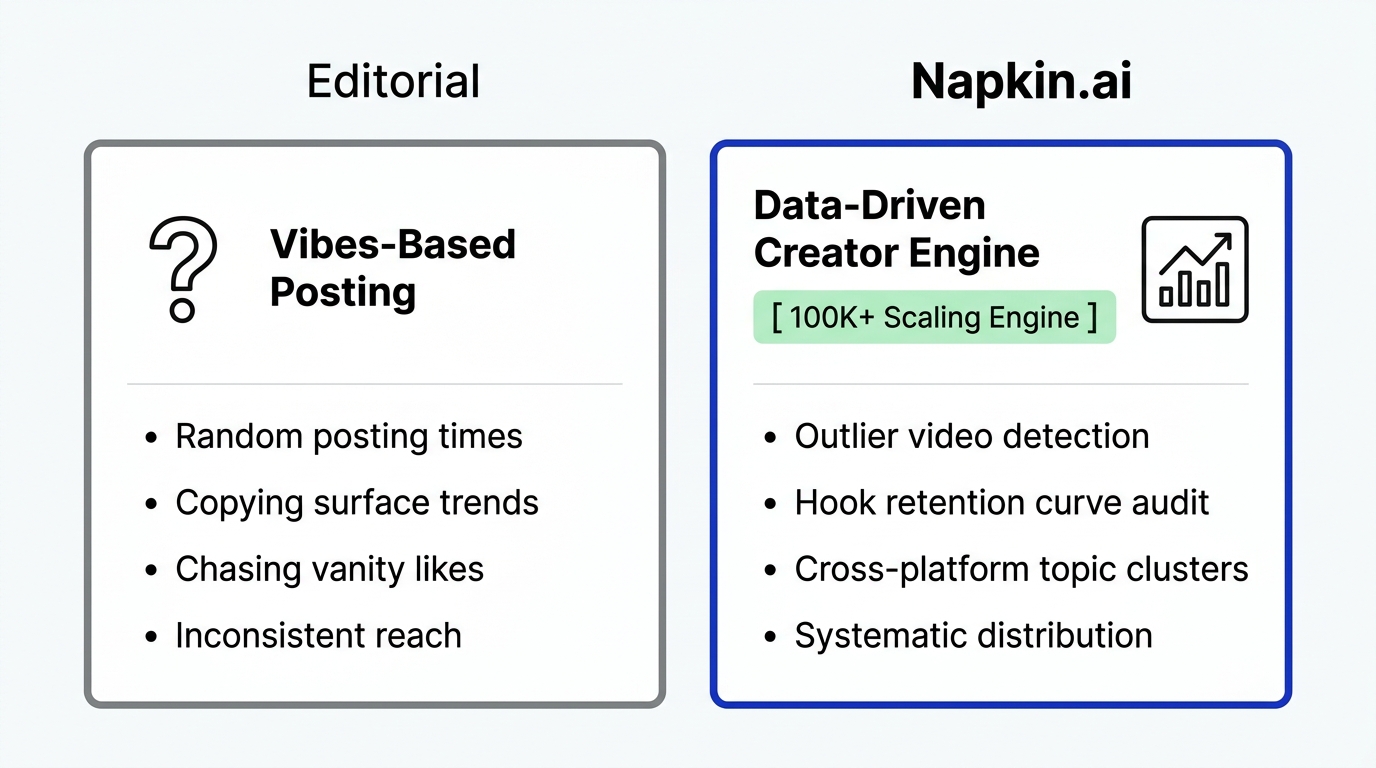
You’re right: you can. But the landscape of content creation has changed. Gone are the days when you could just "post and pray" on a single platform and hope for the best. Today, becoming a successful creator isn't just about making great videos or writing witty posts; it’s about building a sustainable system that gets your message in front of the right people, wherever they happen to be.
In this guide, we’re going to skip the "influencer" fluff and focus on the practical steps to becoming a creator who actually scales without burning out in three months.
Step 1: Finding Your "Smart" Niche
Most people tell you to "follow your passion." While that's great advice for a hobby, it's incomplete for a career. To become a successful content creator, you need to find the intersection of what you love, what you're good at, and what people actually want.
We like to think of this as the "Smart Niche" Venn diagram.

- Passion: What could you talk about for 30 minutes with zero preparation?
- Skill: What are you better at than the average person? (Even if it’s just a little bit).
- Market Demand: Are people searching for this? Are there communities on Reddit, TikTok, or LinkedIn talking about it?
The Secret Sauce: Use a tool like Creator Insights Trends to see what’s actually moving the needle in your potential niche. If you see high engagement on specific topics across YouTube and X, you’ve found a "hot" area with proven demand.
Step 2: Choose Your "Hub" and Your "Spokes"
A common mistake new creators make is trying to be "native" on 10 platforms at once. They spend Monday filming a YouTube video, Tuesday editing a TikTok, and Wednesday writing a LinkedIn post. By Thursday, they’re exhausted.
Instead, pick one Hub platform where you create your primary, high-value content.
- Video Hub: YouTube or TikTok.
- Written Hub: Substack or a blog.
- Professional Hub: LinkedIn.
Then, treat every other platform as a Spoke. The goal is to take that one core piece of content and push it everywhere.
With a multi-platform distribution tool, you can upload that one video and automatically send it to 14+ platforms, including Instagram, TikTok, LinkedIn, and even Reddit. This is how solo creators compete with massive media companies: they aren't working 14 times harder; they're just distributing 14 times smarter.
Step 3: The Minimalist Gear List
You do not need a $3,000 camera to start. In fact, some of the most viral content today is filmed on an iPhone with a $20 lapel mic.
Here is the "Starter Kit" that won't break the bank:
- The Camera: Your smartphone. Modern phones have incredible lenses.
- The Light: A window. Natural light is the best (and cheapest) softbox you'll ever find.
- The Sound: This is where you should spend $30. People will watch a grainy video, but they will click away from bad audio instantly.
- The Workflow: You need a place to organize your ideas. We call this the Creator Canvas. It’s a spatial whiteboard where you can drag and drop reference videos, write your scripts, and plan your distribution calendar in one view.
Step 4: Content Planning (Don’t Wing It)
Consistency is the only "hack" that actually works. But you can't be consistent if you're waking up every morning wondering, "What should I post today?"
Successful creators "batch" their work.
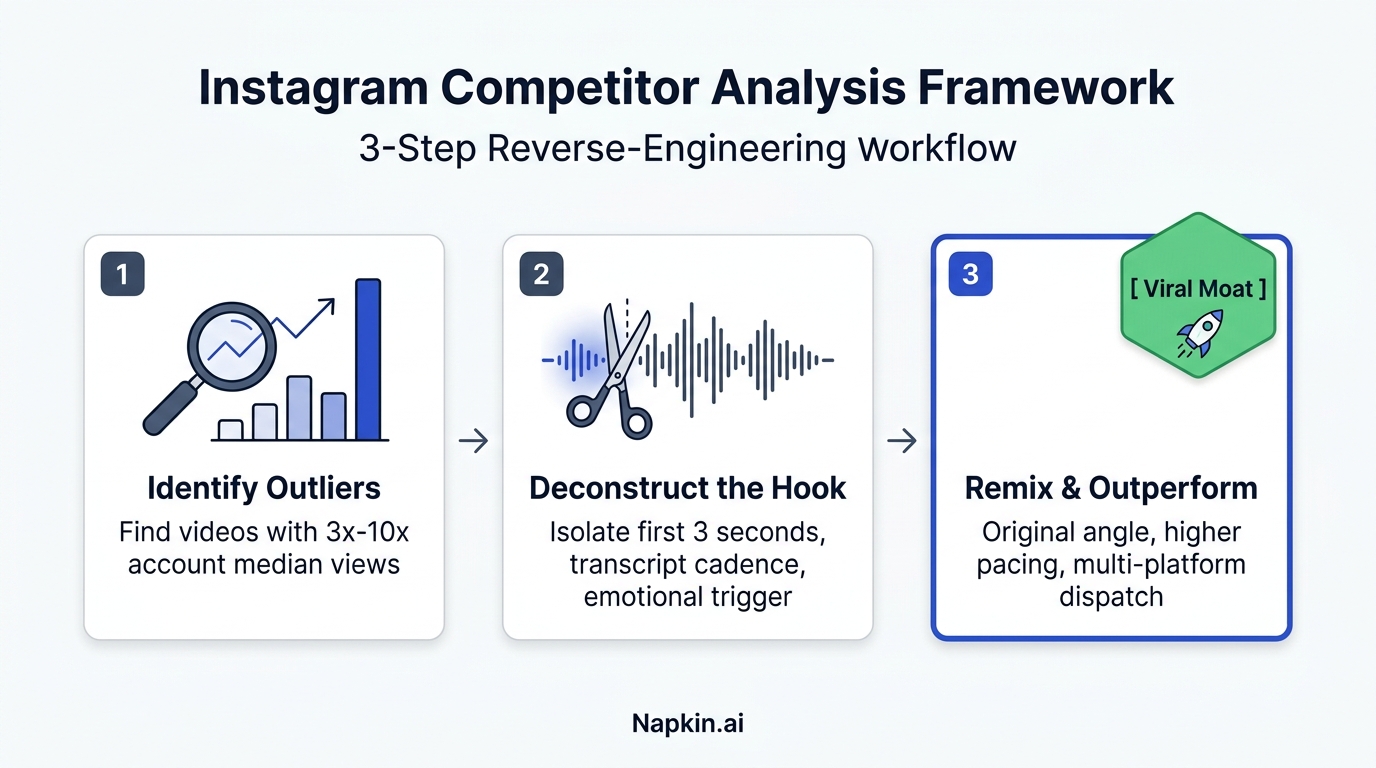
- Ideation: Spend one day a week finding "outlier" ideas. Use competitor tracking to see which videos in your niche are performing 3x better than average. Don't copy them: analyze why they worked. Was it the hook? The pacing? The specific problem they solved?
- Scripting: Take those winning concepts and use a video transcription tool to study the structure of top-performing videos. Use that structure as a blueprint for your own unique script.
- Production: Film 3–5 pieces of content in one session.
Step 5: Master the Art of the "Outlier"
Growth isn't linear. Most of your posts will get "average" views. But every now and then, you’ll hit an outlier: a post that takes off and brings in thousands of new followers.

The goal is to increase the frequency of these outliers. You do this by:
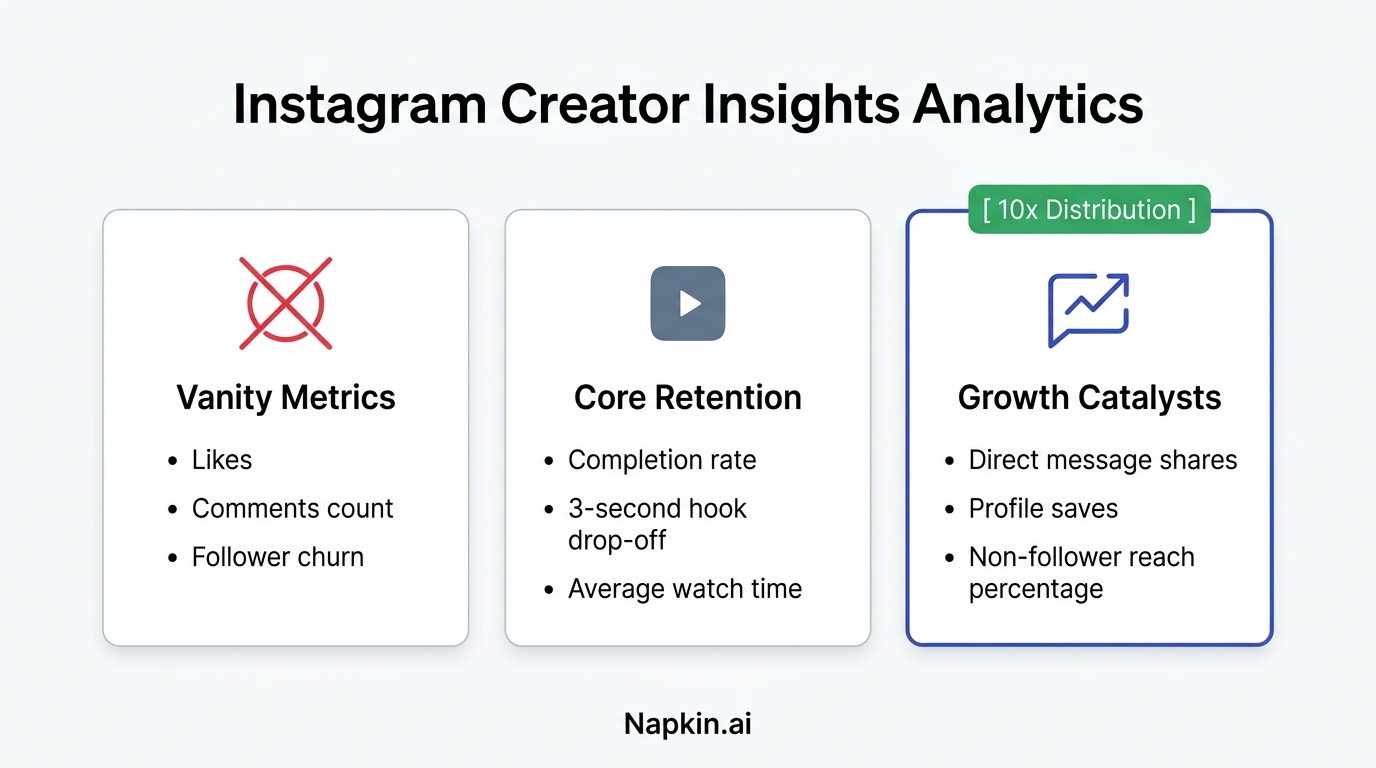
- Auditing your growth: Use a creator audit tool to see which of your posts are actually driving high-quality engagement vs. just "empty" views.
- Double down on what works: If a video about "how to cook eggs" goes viral, your next five videos should probably be about breakfast hacks, not your weekend hiking trip.
Step 6: Distribution is 80% of the Game
If you spend 10 hours creating a video and only 10 minutes posting it to one platform, you are leaving views on the table.
Platforms like TikTok, X, and Reddit often block public posting APIs, making it a pain to automate. That’s why we built the Creator Insights Browser Extension. It acts like a "local agent" on your computer, logging into your accounts securely and publishing your scheduled posts exactly as if you were doing it manually.
Imagine uploading once and having your content live on:
- Instagram Reels
- YouTube Shorts
- TikTok
- Threads
- And 7+ more...
That is how you "become a content creator" in the modern age. You aren't just a filmmaker or a writer; you are a distribution engine.
Step 7: How to Actually Make Money
Monetization usually happens in stages:
- Platform Ad Sense: (YouTube Partner Program, etc.). This is usually the lowest-paying but most passive.
- Brand Deals: Companies pay you to talk about their product. Pro tip: brands care more about engagement and audience niche than raw follower count. Use your audit data to prove your worth to brands.
- Owned Assets: This is the gold standard. Selling your own courses, products, or newsletters.
The Bottom Line
Becoming a content creator is no longer about being the "loudest" person in the room. It’s about being the smartest.
By finding a niche with high demand, using tools to reverse-engineer viral scripts, and distributing your content across 14+ platforms simultaneously, you give yourself 14x more chances to win.
Ready to stop losing views? Plan your first campaign on the Creator Canvas today.