You know the feeling. You’re three minutes into a video. The creator is hitting their stride. The storytelling is tight. Then, the vibe shifts. The lighting changes slightly. Their voice takes on this weird, plastic enthusiasm.
"But before we get back to the video, let’s talk about..."
Your thumb instinctively finds the 'L' key or the right side of your screen. Double-tap. Ten seconds skipped. Double-tap again. You keep skipping until the "Ad" banner disappears.
That right there? That’s the sound of a brand throwing money into a black hole.
It’s 2026. The audience isn't just savvy; they’re allergic to being sold to. The scripted ad: the one where a brand hands a creator a PDF of "must-say" bullet points: is dead. If it isn't dead yet, it's on life support, and the plug is about to be pulled.
The Cringe is Real (and Expensive)
When a creator reads a script, they lose the one thing that makes them valuable: their voice.
You aren't paying for their reach. Reach is cheap. You can buy reach on Google or Meta. You’re paying for their influence. And influence is built on trust. The second a creator starts reading a brand’s marketing jargon: words like "synergy," "breakthrough," or "smooth integration": that trust evaporates.
The audience feels the friction. They know the creator doesn't talk like that. They know the creator is just waiting to get back to the "real" content.
In a world filled with deepfakes and AI-generated slop, authenticity is the only currency that still has value. If your ad feels like an interruption, it’s a failure. If it feels like an obligation, it’s a disaster.
 *Visual: A napkin sketch showing a straight line labeled "Viewer Interest" that takes a sharp, jagged nose-dive at a point labeled "Scripted Ad Segment."*
Why Most Sponsorships Feel Like a Bad First Date
The traditional way of doing sponsorships is broken.
- The Brand sends a brief. Usually a generic PDF.
- The Creator tries to fit it in. They look at their planned video and try to find a "gap" to shove the ad into.
- The Result is a Frankenstein video. Two different pieces of content stitched together with zero chemistry.
This happens because the brand is buying a spot, not a concept. They are treated as an outsider looking for a billboard inside someone else's house.
But what if the brand was part of the foundation?
Enter Organic Integration: The Sponsalert Way
The future isn't "ads." It’s integration.
Organic integration means the product or service is baked into the "idea" phase of the content. It’s not something that happens to the video; it’s part of why the video exists.
Think about it. Instead of a tech YouTuber reading a script about a VPN for sixty seconds, imagine they build a video around "How I got hacked in 24 hours" and the VPN is the tool they use to solve the problem in real-time.
One is an interruption. The other is the hero of the story.
 *Visual: A napkin sketch of two circles. One is "Creator's Idea," the other is "Brand's Solution." They aren't just touching; they are completely overlapped with a big heart in the middle labeled "The Video."*
This is exactly why we built Sponsalert.
We realized that the biggest barrier to organic content is timing. Most brands jump in when the video is already scripted or filmed. By then, it’s too late. You’re just buying a mid-roll.
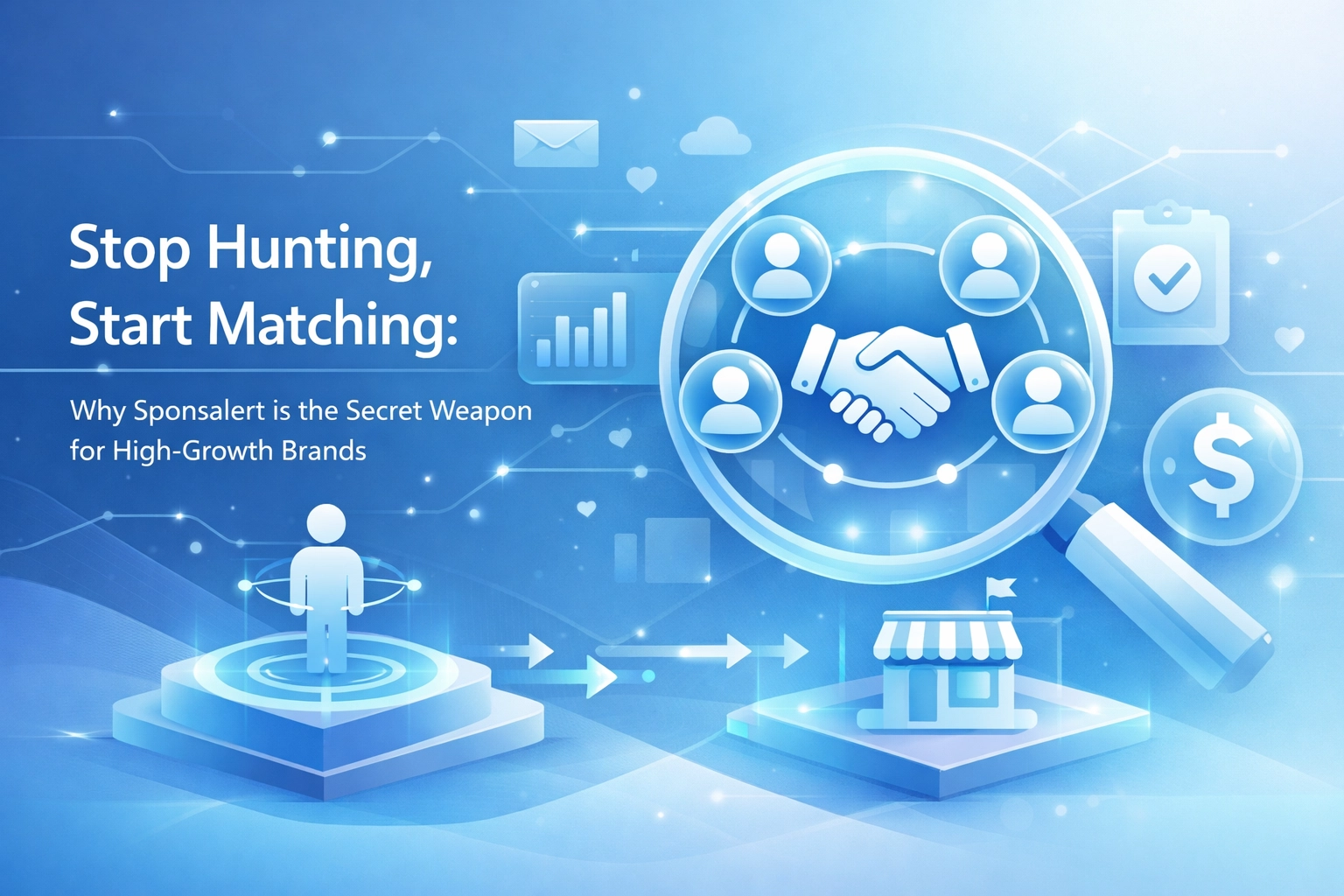
Sponsalert flips the script. It allows brands and creators to connect during the ideation phase. It’s about finding the right "mental match" before the cameras even start rolling.
The Content-First Logic
If you’re a brand manager, you need to stop asking "Does this creator have 100k followers?"
Instead, ask: "What is this creator obsessed with right now?"
If your product aligns with their current obsession, the integration will be effortless. The creator will want to talk about you because you’re helping them make better content. You’re giving them the budget or the tools to do something they couldn't do alone.
When the creator is excited, the audience is excited. When the creator feels like they’re "getting away" with something cool because of a sponsor, the audience feels like they’re in on the win too.
How to do it with Creator Insights
We don't just talk about this; we build the tools to make it happen. If you want to move away from the "scripted death" and into organic wins, here is the playbook using our ecosystem:
- Find the Obsession: Use Discovery to find creators who are actually trending in your niche, not just the ones with the biggest legacy numbers. Look at what they are talking about now.
- Audit the Trust: Use our Audit tool to see if their audience actually engages or if they’re just scrolling past. Look for high "sentiment" scores.
- Collaborate Early: Use Sponsalert to get into the pre-production workflow. Don't send a script. Send a "What if we did this?" message.
- Check the Trends: Use Trends to see what topics are bubbling up. If you can pair a brand with a rising trend through a creator, you’ve hit the jackpot.
- Let the Creator Lead: Give them the bullet points, sure. But tell them to rewrite them in their own slang. Tell them to roast the product if that’s their vibe. The more "human" it feels, the more it sells.
 *Visual: A napkin sketch showing a "Legacy Brand" (stiff, wearing a suit) trying to talk to a "Creator" (casual, holding a camera). Between them is a bridge labeled "Sponsalert" that lets them meet in the middle.*
The ROI of "Not Looking Like an Ad"
Let’s be blunt: Organic integrations convert better.
People buy from people they like. They don't buy from people who look like they’re being held hostage by a marketing department.
When a creator uses your product naturally in a "Day in the Life" or a high-stakes challenge, the viewer doesn't feel the "defensiveness" that usually pops up during an ad break. Their guard is down because they are being entertained.
You’re moving from the "Skip" zone to the "Search" zone.
Instead of skipping the ad, the viewer is opening a new tab to find out more because they saw the creator actually using the thing to solve a real problem. That’s the dream. That’s the 2026 blueprint.
Stop Scripting. Start Integrating.
The brands that will survive the next two years are the ones that stop acting like advertisers and start acting like patrons of the arts.
Support the creator’s vision. Give them the freedom to be weird. Get in the room early so you aren't just an afterthought.
If you're tired of paying for "seconds skipped" and want to start paying for "minutes watched," it's time to change your approach.
The scripted ad is dead. Long live the story.
Join Sponsalert and start building integrations that actually work.